
The Malta Digital Nomad Residence Permit: Everything You Need to Know
A practical, Singapore-focused guide to Malta’s Digital Nomad Residence Permit — eligibility, costs, where to live and how to plan…

A practical, Singapore-focused guide to Malta’s Digital Nomad Residence Permit — eligibility, costs, where to live and how to plan your move from Singapore.
Malta is small but surprisingly well set up for remote work — good cafes, solid internet in the towns and easy weekend hops across Europe.
Treat the Nomad Residence Permit as a flexible bridge: perfect for trying island life without giving up ties back home.
Malta is compact, English-speaking and in the EU — a tempting package for Singaporeans used to efficient travel and clear communications. The island’s mix of Mediterranean climate, reliable internet in main towns and European time zones makes it easy to keep daytime overlap with clients in Asia or Europe.
For many Singapore-based remote workers the draw is practical: manageable living costs compared with major European capitals, a café culture that works well for laptop days, and short hops to other EU destinations on weekends. Think Valletta for heritage strolls, Sliema and St. Julian’s for co-working and nightlife, and sleepy Gozo for longer slow-down breaks.

Malta’s Nomad Residence Permit is aimed at non-EU nationals who work remotely for employers or clients outside Malta. Typical conditions include proof of stable remote income, valid travel documents, health insurance and a clear background check.
Application steps are straightforward in principle: compile identity and employment documents, proof of income or contract, travel insurance and a completed application form through the Maltese authorities. Processing times and fees can change, so always confirm details with the official Maltese government site before applying.
Cost-wise, Malta sits between heartland Singapore and pricier European capitals. Rent in Valletta, Sliema or St. Julian’s will be your largest expense; smaller towns and Gozo are cheaper. Groceries and dining out vary — you can find inexpensive local cafés and mid-range restaurants, but imported goods cost more.
Tax residency is a complex area. Holding a Maltese nomad permit doesn’t automatically trigger full Maltese taxation in every case — much depends on length of stay, your employer type and whether you become a fiscal resident. Singaporeans should seek professional tax advice if planning extended stays.
Healthcare for permit-holders typically requires private travel/expat health insurance until you meet local residency thresholds for public health provisions.

Valletta — Malta’s compact capital — is great for culture, museums and short city walks. Accommodation can be pricier but you’re close to cafes and government services.
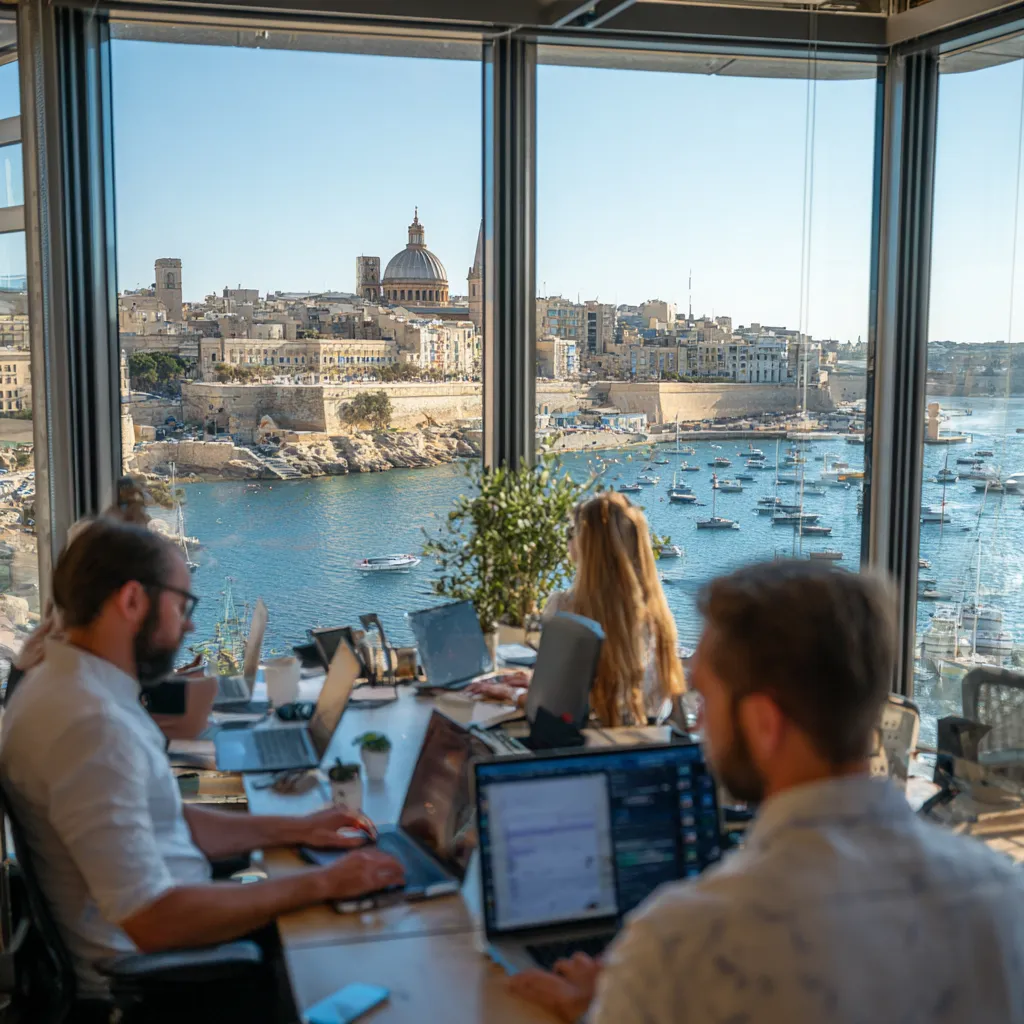
Sliema and St. Julian’s are the hubs for expats and digital nomads: seawall promenades, co-working spaces, cafes with power sockets and good broadband. St. Julian’s also has a livelier nightlife scene if you crave weekend buzz.
Gozo offers a slower pace for weekend escapes or longer stays when you want quieter days. Ferries run frequently from Malta and the island is ideal for outdoor walks and slower remote-work rhythms.

Flights from Singapore to Malta usually involve a connection in the Middle East or Europe; plan trips to combine work and mini-breaks in nearby Schengen countries. Factor in jet lag and time-zone overlap when arranging client calls.
Local SIM cards and eSIMs make life easier — major providers offer prepaid data packages. Cafés are generally laptop-friendly in tourist towns; Maltese coffee culture is more European-café than kopitiam, so expect table service and stronger espresso.
Finally, embrace local food: try pastizzi for a cheap snack, ftira as a Maltese sandwich, and fresh seafood in harbourside towns like Marsaxlokk. Treat Malta as a compact European base for weekend travel while you keep work steady.
Explore more career advice and industry insights.
A practical, Singapore-focused guide to Malta’s Digital Nomad Residence Permit — eligibility, costs, where to live and how to plan…
A practical, Singapore-focused guide to Malta’s Digital Nomad Residence Permit — eligibility, costs, where to live and how to plan…
A practical, Singapore-focused guide to Malta’s Digital Nomad Residence Permit — eligibility, costs, where to live and how to plan…
Find your next opportunity.